
Much of this work takes place in places where delivering water is anything but straightforward.
LM already plays a leadership role in humanitarian WASH coordination. In Sudan, we co-lead the WASH Cluster. In South Sudan, LM leads the sub-national WASH Cluster in Western Equatoria, while in Chad we work through national and local coordination mechanisms across WASH, food security and protection.
LM has worked in Sudan since 1989. Today, our teams operate across eight states in a country where war has displaced millions and severely disrupted basic services. Our programmes include solar-powered water systems, integrated water resource management and emergency WASH interventions, linking immediate humanitarian response with longer-term resilience.
Across our programmes, LM drills and rehabilitates boreholes, builds and restores water supply systems, expands sanitation, supports hygiene behaviour change and trains communities and local authorities to operate and maintain infrastructure. We work where water scarcity is closely linked to displacement, food insecurity, climate pressure and conflict. This means looking beyond infrastructure and working with the systems that keep services functioning, including water resource management, local governance, operation and maintenance, and community capacity.
In Ethiopia's drought-prone Borena region, LM has worked since 2012. Our teams have drilled more than 300 boreholes and protected wells and developed water-harvesting systems. We are now building on that experience through joint work with Arba Minch University's Institute of Water Technology to assess groundwater and surface-water potential, using hydrogeological mapping, water-quality assessment and surface-water modelling.
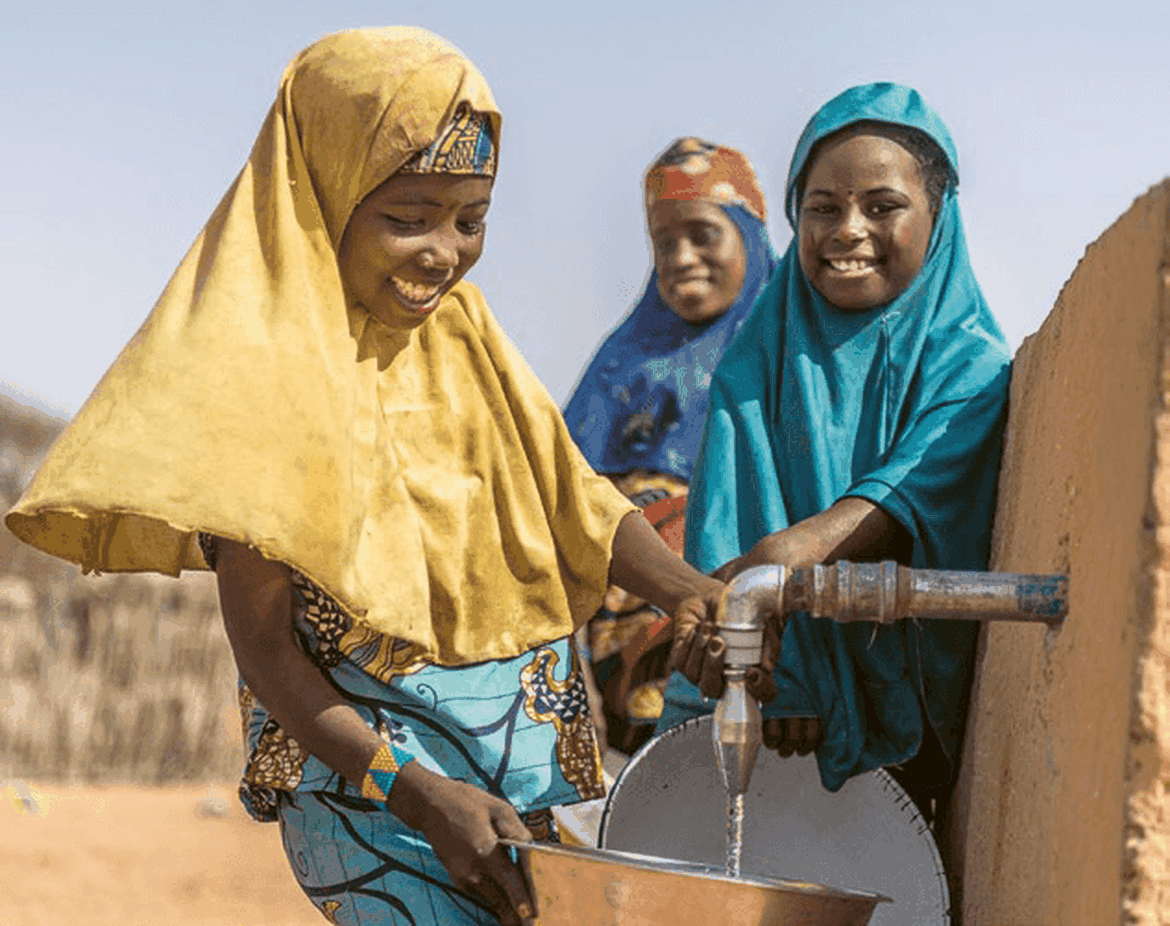
The work does not end with delivery. What matters is whether services continue to work for the communities after the immediate crisis
The Global WASH Cluster, led by UNICEF, coordinates humanitarian organisations, UN agencies and technical actors working on WASH responses in emergencies.
As a member, LM will take part in joint assessments and coordinated response planning, as well as GWC working groups and national coordination platforms in countries where we operate. This gives our programmes direct access to global technical expertise, shared learning and internationally recognised standards. At the same time, it gives us a stronger route to bring knowledge and evidence from crisis-affected and hard-to-reach areas into global WASH discussions.
This local-to-global connection creates opportunities to document and share practical learning from LM’s programmes, including what works, what does not, and what it takes to keep WASH services functioning in fragile and conflict-affected settings. By bringing this evidence into global WASH discussions, LM can help inform wider humanitarian practice. At the same time, global standards, evidence and technical learning can be tested and adapted through our country programmes strengthening the way we work locally.
A borehole in a refugee camp still needs to produce water months later. A solar-powered system in a conflict-affected community needs people who can operate and repair it. Where communities share increasingly scarce water resources, how those resources are managed can also affect livelihoods, displacement and peace.
LM delivers WASH at scale, but the work does not end with delivery. We work across humanitarian response and longer-term development, with a focus on the systems that determine whether services continue to function. This is also what we bring to the Global WASH Cluster: practical experience of responding to immediate needs while strengthening the systems and local capacity that communities will depend on long after the immediate crisis.