
Goats receive veterinary treatment in pastoralist communities in Western Jebel, Sudan
South Kordofan, 20 April 2026
In recent years, recurring livestock diseases and limited access to veterinary services have affected herds across parts of South Kordofan, reducing productivity and placing additional pressure on already vulnerable households.
In March, LM International, with funding from the European Union's humanitarian aid department (DG ECHO) and in partnership with the Sudanese organisation ZAHRA, launched a livestock treatment campaign in Western Jebel. The intervention provided veterinary medicines, vaccinations and deworming services to pastoralist and agro-pastoralist communities.
The campaign was carried out during a period widely regarded by local livestock owners as the most effective time of year for preventative treatment:

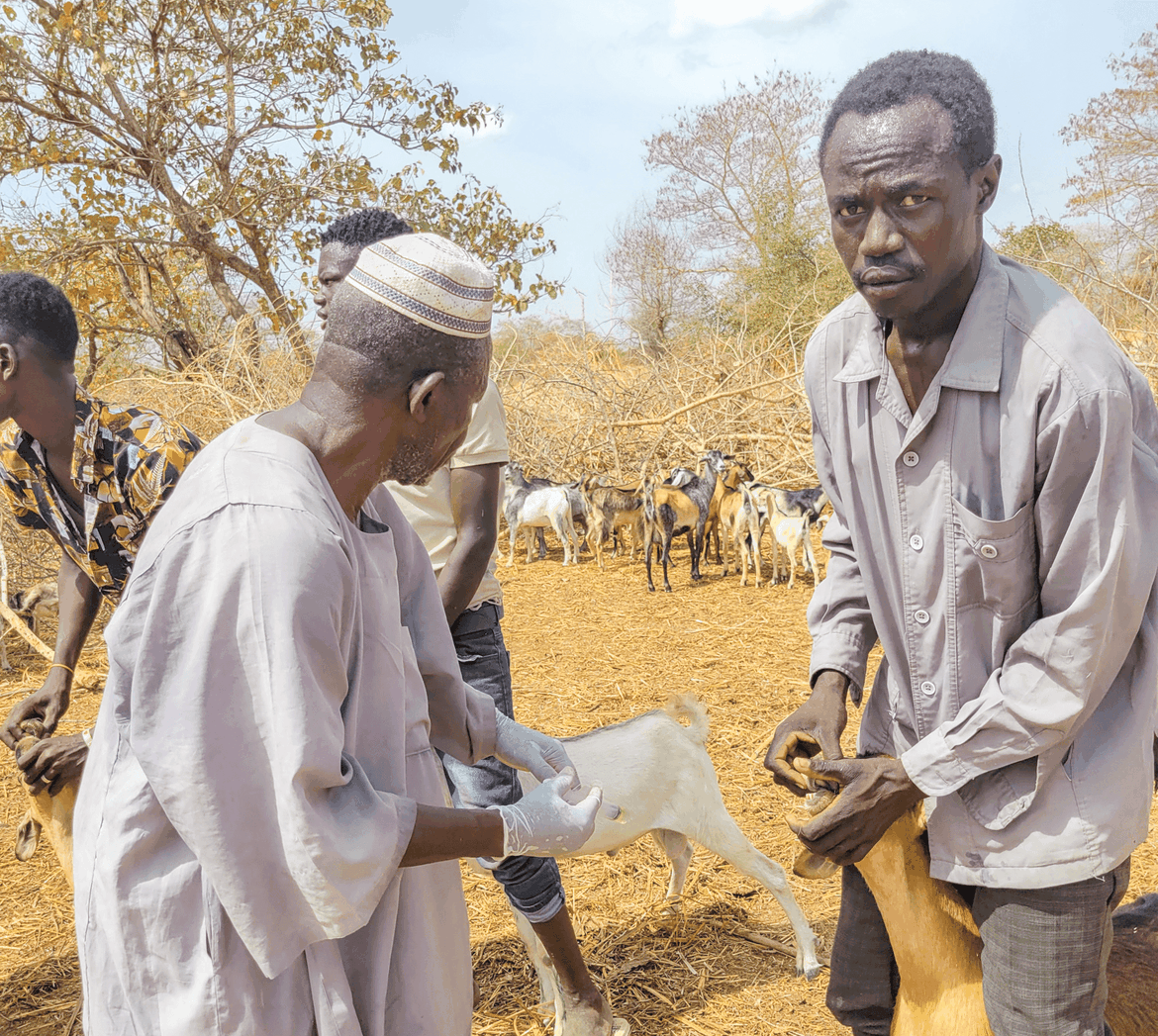
Healthier herds mean increased availability of milk and meat as well as greater opportunities to generate income.
According to community members, livestock health improved following the campaign, with fewer reported cases of disease and lower mortality among treated animals. Healthier herds also meant increased availability of milk and meat, as well as greater opportunities to generate income.
The intervention took place in South Kordofan, a region affected by conflict, restricted access and limited infrastructure. In parts of Western Jebel, roads are scarce, mobile phone coverage is limited and some areas can only be reached through established local networks.
LM International has operated in South Kordofan for more than two decades, working with local leaders, faith groups, traditional authorities and community-based organisations. Those relationships have enabled programmes to continue in areas that remain difficult to access for many humanitarian actors.
The livestock campaign was implemented in partnership with ZAHRA, a Sudanese organisation with longstanding ties to local communities. While LM International provided technical and financial support, local partners played a central role in identifying needs, engaging communities and facilitating implementation.
The project also included training and support for Community Animal Health Workers (CAHWs), who continue to provide basic animal health services after the campaign's completion.
The livestock campaign in Western Jebel reflects a broader discussion taking place across the humanitarian sector about how to respond effectively in increasingly complex and hard-to-reach environments. As humanitarian needs continue to rise while funding becomes more constrained, organisations are facing difficult questions about how to sustain assistance and reach the people most in need.
A recent briefing by VOICE, the network representing European humanitarian NGOs, argues that humanitarian responses are strongest when they draw on the complementary strengths of local, national and international actors, with assistance led by those best placed to reach affected communities. The experience in South Kordofan offers a practical example of this approach. Long-standing relationships with local communities and the leadership of national partner ZAHRA helped ensure that assistance reached pastoralist families at the right time, while international support provided additional resources and technical expertise.
For Fakid Mohammed, the results are visible in the health of his herd. For humanitarian organisations operating in South Kordofan, the campaign offers an example of how local leadership and complementary partnerships can help sustain assistance in areas where access remains a challenge.
Read the VOICE briefing: Why Diversity, Complementarity and Local Leadership Are Essential for EU Humanitarian Action.